How My Perfect Idea Died in 3 Days
This post will share the raw story of an MVP I built with high hopes that failed quickly due to a lack of early user feedback, and the practical framework I now use to validate ideas before writing a single line of code.
The MVP That Wasn't: How My 'Perfect' Idea Died in 3 Days (And What I Learned About User Feedback)
I remember the feeling so clearly. It was a crisp autumn day, and I was buzzing with excitement.
I’d just finished building what I thought was a brilliant new Minimum Viable Product (MVP). This was it, the one that was going to change everything.
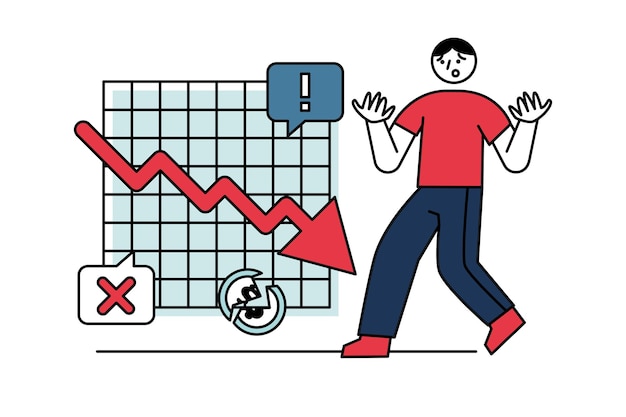
I launched it with a flourish, picturing users flocking to it, singing its praises. But three days later, crickets.
The dashboard was empty. My "brilliant" idea was gathering digital dust, a monument to my misplaced confidence.
This is a familiar trap for many solo founders, myself included. We fall in love with our own ideas, convinced we know exactly what the world needs, and dive headfirst into building. We spend weeks, sometimes months, crafting a solution in a vacuum.
The painful truth is, assuming you know what users want is a fast track to wasted time and effort. You’re building a castle on sand without asking if anyone actually wants to live there.
After that particular failure, I knew I needed a better way. I needed to stop building in the dark and start bringing users into the process before I wrote a single line of code. This led me to develop my "Feedback First" framework.
It’s a simple, three-step process designed to validate ideas early and often:
1. Problem Interviews: Before even thinking about a solution, I talk to potential users about their problems.
I ask open-ended questions to understand their pain points, their current workflows, and what they’re already trying to do to solve these issues. The goal here isn't to sell them on an idea, but to deeply understand their reality.

2. Solution Sketching: Once I've a clear understanding of a real, validated problem, I start sketching out potential solutions.
These are ugly sketches, often just on a whiteboard or a piece of paper. I’m not focused on design or code; I’m focused on the core functionality and how it addresses the user’s problem.
3. Low-Fidelity Testing: This is the crucial step.
I take those rough sketches and show them to the same people I interviewed. I ask them to "walk through" their problem using the sketch.
This is where you get brutally honest feedback. You can see immediately if your proposed solution resonates or if you’ve missed the mark entirely.
You don't even need a landing page for this!
Let me give you a real example. I was working on a tool to help indie makers track their product launches. My initial idea was a complex dashboard with analytics.
But after conducting problem interviews, I realized the biggest pain point wasn't analytics, but simply remembering what to do for each launch and when. Users were drowning in checklists and scattered notes.
So, I sketched out a super simple, task-list-based approach. I showed it to a few maker friends.
One of them immediately said, "This is exactly what I need. I was using a Google Doc, but this is so much cleaner." Another suggested adding due dates, which I hadn't even considered in my initial "brilliant" dashboard idea.

This simple sketch-based validation saved me weeks of building a feature set nobody actually wanted. It allowed me to pivot to something much more aligned with user needs before I’d invested significant development time.
The takeaway is simple: Shift your mindset from "build and hope" to "validate and iterate." By talking to users and testing your ideas with low-fidelity prototypes before you build, you dramatically increase your chances of creating something people actually want and need.
It’s about building smarter, not just harder. Stop falling in love with your ideas and start falling in love with solving your users' problems.
What are your biggest struggles with validating ideas? I’d love to hear them in the comments below.