When Feature Requests Overwhelm: My System for Taming the Inbox and Building What Matters
Early user feedback is gold, but it can quickly become overwhelming. I detail how I went from drowning in feature requests to having a clear, organized system for prioritizing and building.
When Feature Requests Overwhelm: My System for Taming the Inbox and Building What Matters
Let's be honest, getting that first trickle of user feedback is exhilarating. It feels like proof that people actually care about what you're building. When I launched my first few products under the 52-product challenge, I was practically glued to my inbox, soaking up every suggestion.
Then, it happened. The trickle turned into a flood.
Suddenly, my inbox was a chaotic mess of feature requests, bug reports, and general suggestions. I felt like I was drowning, trying to keep track of everything and feeling guilty about not acting on every single idea.

This overwhelm led to a dangerous paralysis. I was so busy trying to manage the idea of feedback that I wasn't actually building anything meaningful.
It felt like I was letting my users down, and worse, letting myself down. I knew I needed a system, and fast.
My "Feedback Triage System"
After a lot of trial and error, I landed on a simple, yet effective, system I call the "Feedback Triage System." It’s not fancy, but it’s made a world of difference in how I handle user input. The core idea is to categorize, prioritize, and then act.
Here’s how it breaks down:
1. The Inbox: The Holding Pen Everything starts in my inbox. I don't try to categorize or respond deeply here.
The goal is just to get it out of my head and into a system. I use a simple "Forward to" rule in my email client to send all feedback to a dedicated email address.
2. The Triage Board: My Command Center I use a simple Kanban board (Trello, Asana, Notion - whatever works for you) as my "Triage Board." Every piece of feedback gets a card.
3. Categorization: The First Pass When I've a few minutes, I go through the new cards. I assign them to one of these categories:
- Bug Report: Something is broken.
- Feature Request: A new idea or enhancement.
- Question/Support: User needs help understanding something.
- General Feedback: Positive comments, ideas for improvement that aren't specific features.
4. Prioritization: What Moves the Needle? This is the crucial step. Not all feature requests are created equal. I ask myself a few questions for each "Feature Request" card:
- Does this align with my product's core mission?
- How many users would benefit from this? (I’m not looking for exact numbers, but a general sense.)
- Is this technically feasible for me to build right now?
- Does this solve a clear pain point for my target audience?
Based on these, I assign a priority level:
- P0: Critical Bug: Needs immediate attention.
- P1: High Impact Feature: Solves a major pain point for many users or is essential for core functionality.
- P2: Nice-to-Have Feature: Would improve the experience but isn't critical.
- P3: Future Consideration: Interesting idea, but not a priority for now.
For "Bug Reports," I use the same priority system. "Questions/Support" get their own workflow - usually a quick answer or a link to documentation.
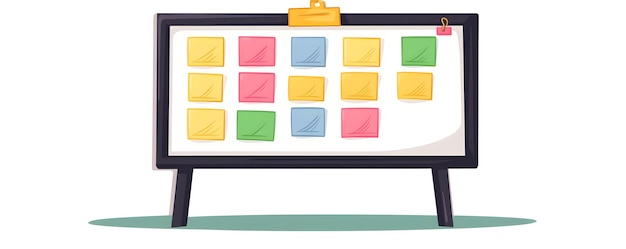
5. Action & Implementation: Building What Matters Once categorized and prioritized, the "P0" and "P1" items become part of my active development sprint. I’ll move these cards to a "To Build" column. "P2" items might go into a "Backlog" column, and "P3" items are archived or noted for future review.
This system helps me focus on what will actually move the needle for my users and my business, rather than chasing every shiny new idea.
Taking Control of Your Feedback Loop
It took me a while to realize that not every suggestion needs to be implemented immediately, or even at all. My goal as a solo founder is to build a sustainable product, and that means focusing my limited time and energy wisely.
Here are the actionable steps you can take:
- Create a dedicated feedback channel: Whether it's a specific email, a form, or a tool like Canny.io, centralize your feedback.
- Implement a simple categorization system: Bug, Feature, Question - keep it basic.
- Define your prioritization criteria: What matters most for your product and your users?
- Schedule regular feedback review time: Even 15-30 minutes a week can make a huge difference.
- Don't be afraid to say "no" or "not now": It’s better to build a few things well than many things poorly.
By implementing this "Feedback Triage System," I went from feeling overwhelmed and reactive to feeling in control and proactive. It allows me to honor my users' input while staying focused on building a product that truly solves problems.
What's your system for managing customer feedback? I'd love to hear about it in the comments!